
 Back to Insights
 12 Feb, 2026
 FCR (Financial & Corporate Relations)
Over the past year — and continuing through recent market volatility — precious metals markets across the Asia-Pacific region have revealed a clear divergence in investor behaviour.
In Sydney, long queues outside bullion dealers have become a familiar sight. What began during the 2025 rally to record gold prices has persisted even after the sharp pullback in early February 2026, underscoring sustained retail demand for physical metal.
In Singapore, buyers similarly queued at banks during the February sell-off, stepping in decisively as prices fell and bullion products sold out.
Different phases of the cycle. Same response.
Retail conviction in physical gold across APAC remains strong.
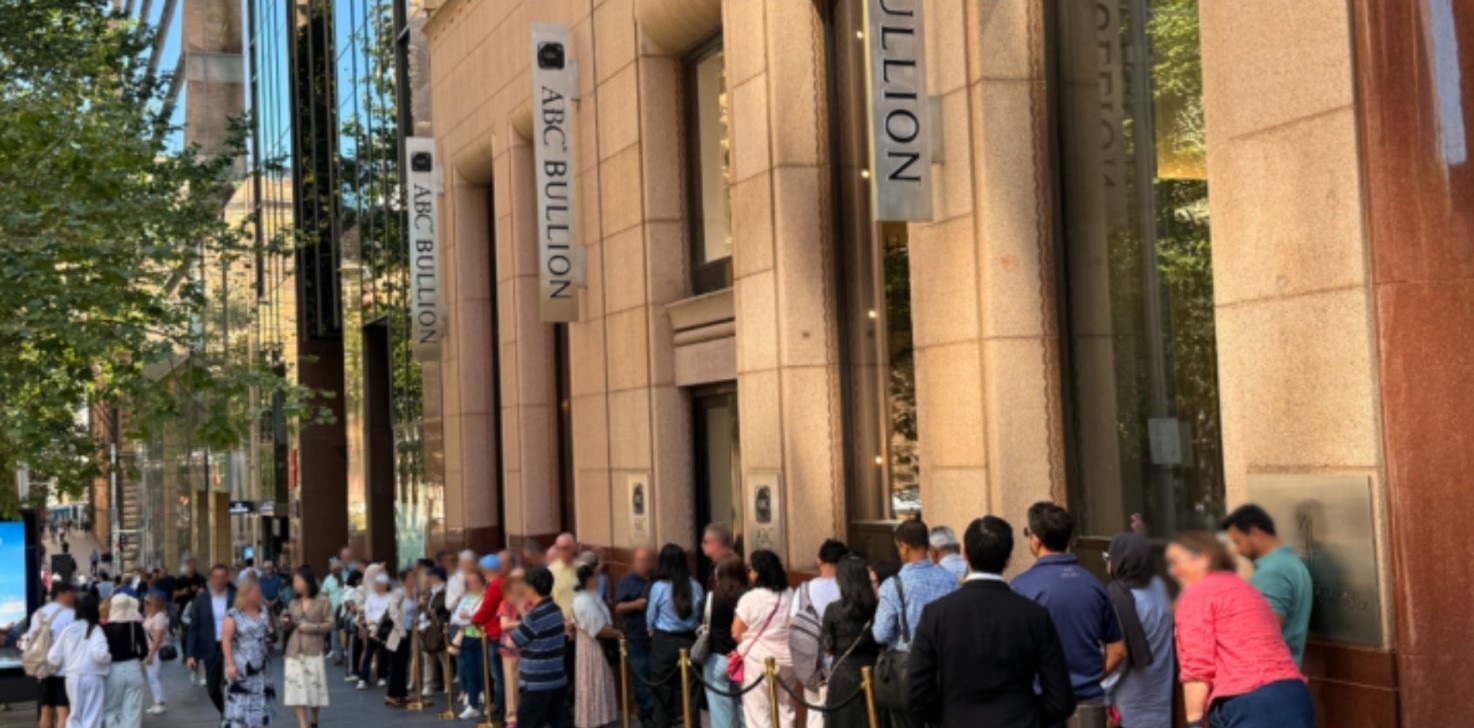
Queues at ABC Bullion in Sydney
At the same time, professional capital has responded very differently — trading volatility at one end of the spectrum, while selectively deploying capital into upstream assets through primary markets at the other.
Retail investors are still buying the metal
Retail participation has been one of the defining features of the precious metals cycle across APAC.
In Australia, demand for bars and coins surged during the 2025 price rally and has remained elevated despite subsequent volatility. In Singapore, retail buyers responded to the February pullback by accumulating physical gold rather than exiting positions.
Across both markets, the motivation is consistent.
For retail investors, physical gold continues to represent:
• a hedge against geopolitical and macro uncertainty
• a store of value outside the financial system
• a long-term asset rather than a trading instrument
Rather than attempting to time markets precisely, many retail participants have treated both price strength and price weakness as opportunities to maintain or build exposure.
Professional capital is responding selectively
Institutional behaviour across APAC has been far more nuanced.
Some trading desks have focused on monetising volatility — using sharp price swings, crowded positioning and liquidity dislocations (particularly in silver) as tactical opportunities. For these participants, precious metals are as much a volatility product as a directional trade.
Elsewhere, strategic capital has continued to engage through primary issuance, backing assets and teams where value is driven by execution milestones rather than short-term metal prices.
Recent placements into development-stage gold assets — including participation by Asian strategic investors — reinforce that sophisticated capital is still being deployed into the sector, albeit selectively and with a strong focus on project quality, funding use and delivery.
Between queues and traders sits the equity opportunity
Between physical buyers and short-term traders sits a third cohort: equity investors.
Listed gold and silver companies operate at the intersection of:
• physical demand that underpins long-term pricing
• financial volatility that shapes sentiment and funding windows
• strategic capital seeking exposure to future supply rather than spot prices
During periods of heightened volatility, attention often shifts up the value curve — away from bullion itself and toward companies with credible development pathways, scale potential and clear execution plans.
This is where longer-term capital increasingly concentrates.
Strategic capital is moving earlier in the cycle
A broader trend emerging across APAC is a preference for earlier-stage exposure.
Rather than chasing metal prices directly, strategic investors are allocating capital to projects, management teams and jurisdictions where future supply can be shaped — and where volatility can create disciplined entry points.
This reflects a shift:
• from trading the metal
• to underwriting future production
In volatile markets, this form of capital seeks leverage and optionality, not just price exposure.
Why this matters now
Recent price swings have not undermined confidence in precious metals. Instead, they have highlighted how layered and sophisticated APAC’s market has become.
Retail ownership remains elevated.
Volatility trading continues to play a role.
Strategic capital is deploying selectively and earlier in the value chain.
Understanding who you're speaking to — and why they're investing matters more than predicting the next move in gold or silver prices.
Continuing the conversation
These dynamics — sustained retail engagement, selective institutional positioning and strategic capital moving up the value curve — are shaping discussions with Asia-Pacific investors today.
They will also form part of the dialogue at Australian Precious Metals Day in Hong Kong (26 February 2026), where Asia-based investors will hear directly from a select group of ASX-listed gold and silver companies at pivotal stages of development, production and exploration.
